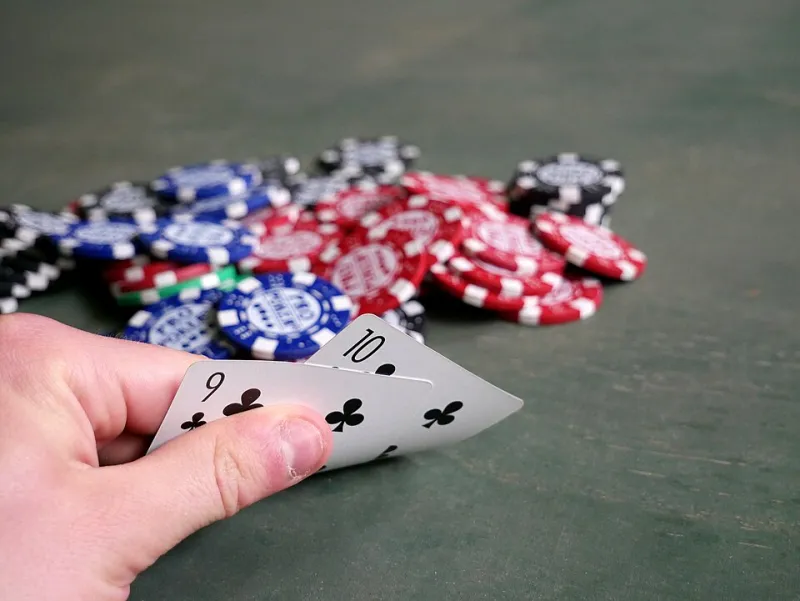
Night Owl Nation: Why the Hours You Play Online Say Everything About How Australians Gamble

Photo: SCHolar44, CC0, via Wikimedia Commons
It's 11:30 on a Friday night. The group chat's gone quiet, the last round has been downed, and you're home with your phone in hand and a mild sense of invincibility that three schooners and a good week at work have conspired to produce. Sound familiar? You're not alone — and the patterns that emerge from this very Australian sequence of events are worth examining honestly.
Australia has a gaming culture unlike anywhere else in the world. We came to it through the pub, through the TAB on the corner, through the pokies in the front bar and the footy tipping comp at the office. That cultural DNA doesn't disappear when we migrate to online platforms. It travels with us, shaping when we play, how much we're willing to risk, and what we're actually chasing when we open a slots lobby or settle into a live blackjack table at midnight.
The Friday Night Effect
Let's start with the obvious one. Friday night is peak social energy in Australia — the exhale after the working week, the moment when the collective mood lifts. It's also, statistically, when a lot of online gaming sessions begin with more enthusiasm than strategy.
This isn't a moral judgement. It's just a pattern worth naming. The same psychology that makes Friday night feel like a good time to be generous — buying rounds, saying yes to things — also makes it feel like a reasonable moment to raise your usual bet ceiling. The problem is that the house doesn't know it's Friday. The RTP on a slot machine is identical at 11 PM on a Friday as it is at 2 PM on a Tuesday.
If you're going to play on a Friday night — and plenty of us do, and there's nothing wrong with it — the move is to set your session limit before the night starts, not after the third drink. King Billy's responsible gaming tools, including deposit and session limits, are genuinely useful here precisely because they let you make the sober decision in advance.
Sunday Arvo: A Different Beast Entirely
Sunday afternoon is Australia's other great gaming moment, and it operates on completely different energy. This is the slow-burn session — the NRL or AFL game on in the background, a cold one in hand, nowhere particularly urgent to be. Sunday arvo betting is almost meditative by comparison to Friday night.
Interestingly, this is where a lot of Aussie punters do their most considered sports betting. The weekend's major fixtures are live, there's time to actually read the form, and the relaxed pace tends to produce more disciplined wagering. It's less about chasing excitement and more about engagement with sport as a cultural ritual.
For slots and table games, Sunday afternoon players tend to set longer sessions with lower stakes — the opposite profile of Friday night. That's actually a reasonable approach if you're treating gaming as entertainment rather than a get-rich-quick exercise.
The Folklore Factor: Aussie Superstitions at the Digital Table
Every culture brings its superstitions to the gaming table, and Australians are no exception — even if we'd never admit it publicly. There's a particular strand of larrikin fatalism in Australian gambling culture: the belief that luck is fickle, that the machine's "due," that playing your footy team's colours somehow influences the outcome of an unrelated pokies session.
None of it has any basis in how RNG-driven games actually function, of course. A slot machine at King Billy has no memory of your previous spins. It doesn't know you're wearing your lucky socks. The random number generator doesn't care that Carlton's playing tonight.
But the superstitions are culturally interesting because they reveal something about how Australians relate to risk. There's a strong tradition of believing in the individual's ability to influence outcomes through behaviour, timing, and attitude — what you might call the Bradman Effect, the idea that preparation and mindset genuinely shift results. In sport, that's often true. In RNG gaming, it isn't, and recognising the difference is genuinely useful.
Late Night and the Risk Dial
Here's the uncomfortable truth about the night shift: fatigue is a genuine factor in decision-making quality, and most people dramatically underestimate how much it affects them. The same session that feels sharp and controlled at 10 PM can get sloppy by 1 AM — not because of anything the platform has done, but because your brain's prefrontal cortex, the bit responsible for risk assessment, is running on fumes.
This is where the night-owl culture of Australian gaming can work against players. We're a late-staying nation — the pub culture, the sports broadcast schedules, the time zones that put European football on at midnight — and the habit of playing "just one more session" at an hour when your judgement is genuinely compromised is worth being honest about.
Setting a hard stop time, separate from a monetary limit, is one of the more underrated responsible gaming tools. King Billy's session time reminders exist for exactly this reason.
Playing With, Not Against, Your Culture
None of this is an argument against late-night gaming or Friday sessions or Sunday arvo flutter. Australian gaming culture is genuinely enjoyable — it's social, it's tied to sport and community, and when it's working well, it's a form of entertainment that fits naturally into how we spend our leisure time.
The point is just to play with your cultural rhythms rather than being unconsciously steered by them. Know that Friday night is a high-energy, lower-discipline moment. Recognise Sunday arvo as the better time for considered decisions. Be honest about the fact that 1 AM is not your sharpest hour.
The best version of online gaming at King Billy — or anywhere — is the version where you're making active choices rather than just going along with whatever mood the night has handed you. That's not a lecture. That's just good punting.